
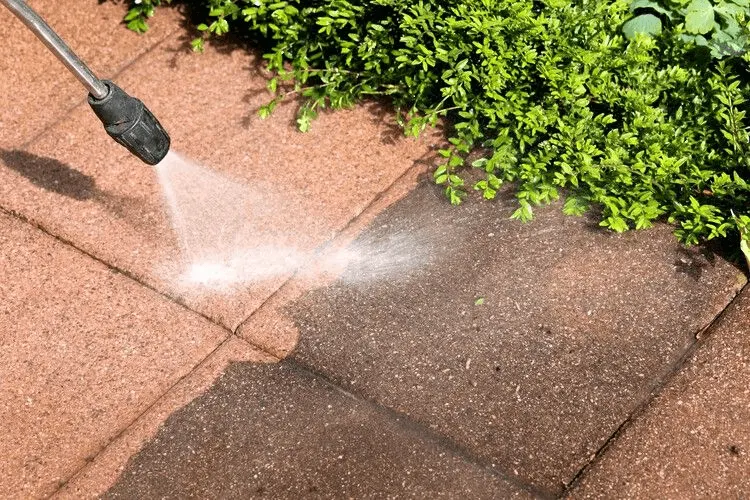
Salt isn't ordinary dirt: sea spray carries salts into the pores, and they come back to the surface as the floor dries. Pressure washing alone won't remove it.
How to tell if your floor has salt
White marks that reappear after cleaning, crumbling joints, a greyish veil over dark tiles or a rough feel. Very common on the seafront in places like La Isleta, Melenara, Arguineguín or Puerto de las Nieves.
What not to do
- Scrub with hydrochloric acid: it attacks cement joints and can stain stone and concrete.
- Use maximum pressure: it opens the pores and lets more salt in next time.
- Clean without rinsing: dissolved salt dries again in the same place.
How to remove it properly
Apply a specific product that dissolves and neutralises the salts, let it work, then clean with controlled pressure and plenty of water flow to carry the salts out of the pores, and rinse well. On exposed floors, a breathable sealer greatly reduces salt penetration.
FAQ
Does salt damage the floor or just stain it?
Both. Over time, salt crystallising inside the material erodes joints and porous surfaces.
How often should a seaside terrace be cleaned?
On the seafront, ideally one technical clean a year, with fresh-water rinses after rough-sea days.